Bev Ritchie's Building
On October 15, 1983 the Saddledome opened, months late and $16.5 million over, with a name a maintenance worker and his son came up with in front of a hockey game. The first page of The Saddledome's Last Yee-Haw.
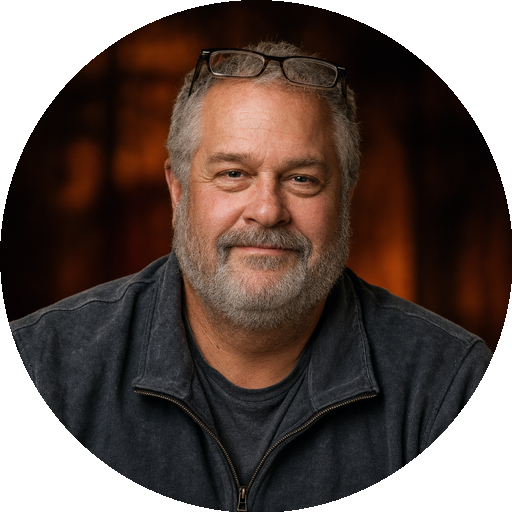
Bev Ritchie got the call on a Wednesday afternoon in June of 1982. On the line was Alderman Don Hartman, and the news was that the new coliseum going up at Stampede Park had a name, the Olympic Saddledome, and that the name was his.
Ritchie was 43 and did maintenance work on buildings for a living. He was a Flames fan, the kind who had been to several games but could not have afforded season tickets, and season tickets were the prize. When the Calgary Herald caught up with him, hours later, he was wearing a Flames T-shirt in honour of the occasion, still a little dazed, and he stepped out onto a balcony to point out the construction site.
“I was saying to the guys at work today, when I’m gone the building will still be there, with the name I chose,” he told the paper. “I almost feel like it’s my building.”
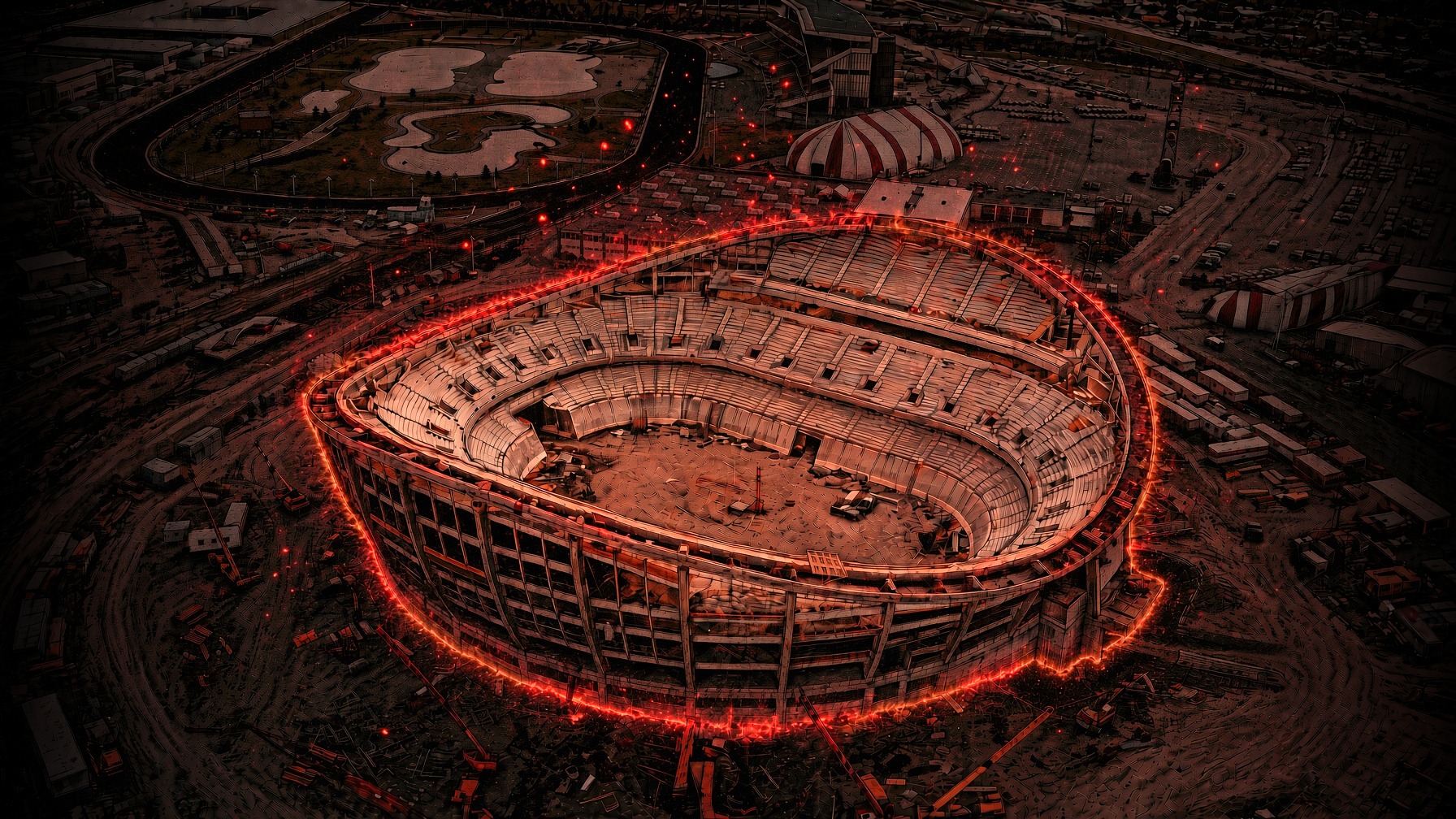
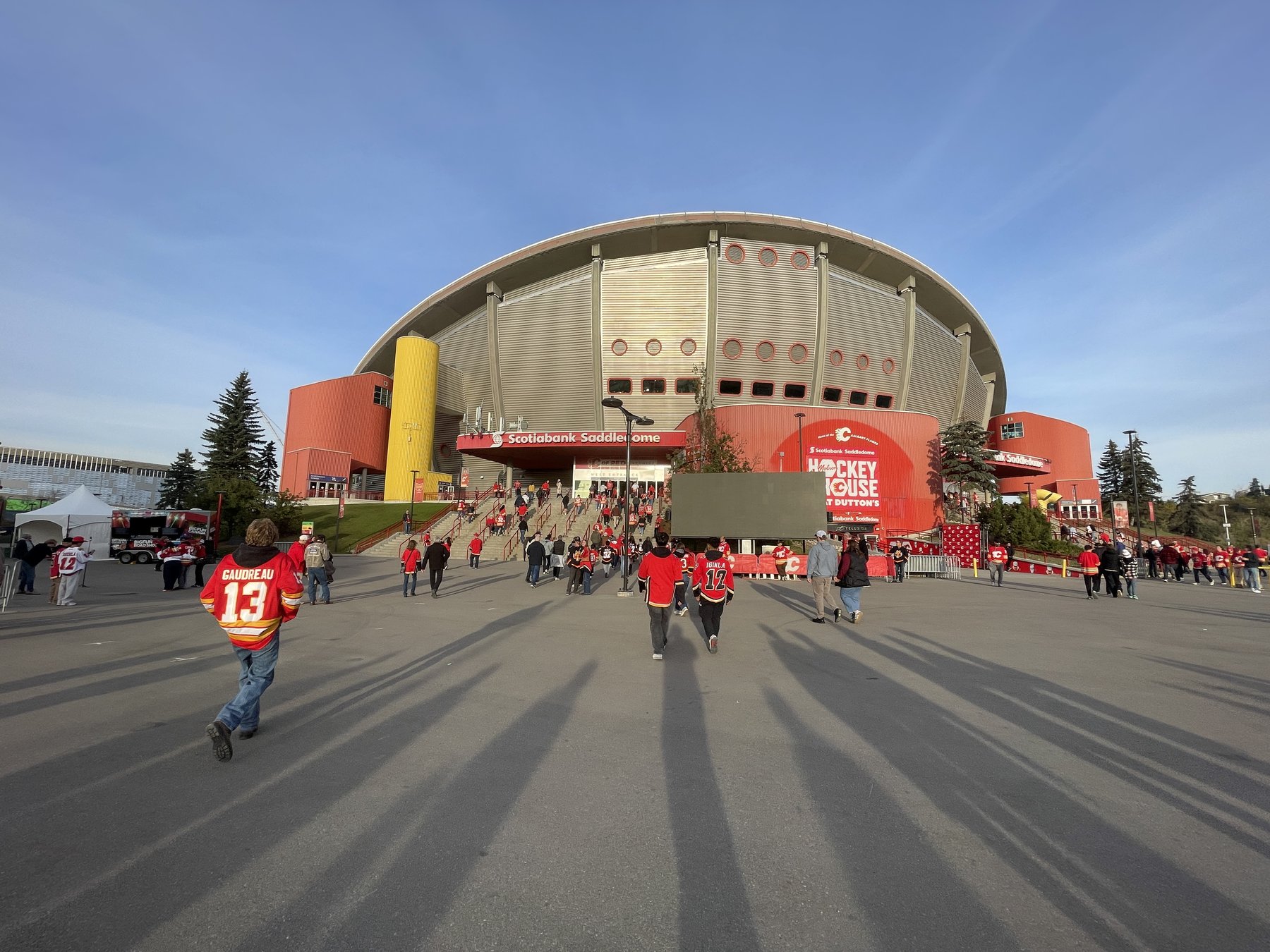
The building opened on October 15, 1983, forty-three years ago this week. This is the first page of a scrapbook for its last season.
The hole in the ground
Nobody turned a sod. On Wednesday, July 29, 1981, the provincial cabinet having waived the city’s planning rules the day before, a 12-man crew from Cana Construction moved two office trailers onto the Stampede grounds and started putting up fence. “The fence post holes were dug by noon,” the project superintendent, Stan Hostland, told the Herald. By afternoon a mechanical shovel was digging the hole for the foundation.
“Maybe we’ll have a ceremony when we pour the first concrete,” said the project manager, Bill Pratt.
The news that the last hurdle had been cleared went on the Herald’s front page that Wednesday, under a much bigger photograph of Prince Charles kissing Lady Diana’s hand on the balcony of Buckingham Palace. The province had stepped in over the objections of Victoria Park residents who wanted parking and traffic conditions written into the permit, and some aldermen called the move heavy-handed. Mayor Ralph Klein, who had asked for it, said he hated to do it. “I really did.”
Cana is building Scotia Place too, next door. Hold onto that. It comes back.
How the Saddledome got its name
For its first year the building was the Olympic Coliseum, which was a working title and sounded like one. In April 1982 the Calgary Olympic Coliseum Society, which was overseeing the construction, announced a contest to name it. Entries closed May 3. The coliseum was costing $82.4 million, the Herald reported, and was scheduled to open on April 1, 1983.
Hartman, a city alderman and the society’s man on council, explained how a winner would be picked if a lot of people sent in the same idea. “We will probably throw all the winning names into a barrel and draw a winner,” he said.
They got 1,270 entries offering 735 different names. The runners-up, as the Herald tallied them: Olympic Coliseum, the name it already had, with 30 votes. The Saddle, 22. Chinook Coliseum, 20. Terry Fox Memorial Arena, 18. Stampede Coliseum, 17. Further down the list were the Barn, the Big See, the Bonanza Bowl, the Branding Iron Centre, Corral ‘88, the Flambeau and something called Concavia. The committee ruled out naming it after a person early, which ended the hopes of the Bob Edwards Eyeopener Coliseum.
Seventy-four entries had some version of Saddledome or Olympic in them, or both. Three judges, whose names were kept secret, combined the two most popular ideas, and Ritchie’s entry was the one picked from a hat holding those 74. Hartman announced it at a news conference on June 2. “Some people won’t like it,” he said.
He was right about that. Not everyone believed in the hat, either. Six months earlier, in December 1981, the Herald columnist Pat McMahon had written that “top people at the Stampede are pushing for Olympic Saddledome as the official name for Calgary’s new arena.” When the contest landed on exactly that, McMahon reprinted his old column and called it a “remarkable coincidence.” He worked out that the 1,271 entrants had spent $371.30 on stamps and suggested they might feel they had been had. Even the Herald’s news story allowed that the judges had chosen “a name that had been bandied about in public for weeks.” None of which makes Ritchie any less the winner. It only means his idea was a popular one.
Neither Olympic nor western
The Olympic people hated it. Calgary had won the 1988 Winter Games in the fall of 1981 and the organizing committee was paying a third of the building’s cost. Days before the announcement its vice-chairman, Bob Niven, had written to Hartman asking him not to pick it.
Frank King, the committee chairman, gave the Herald the line that has outlived the argument. “We don’t like the name as a combination,” he said. “It is neither Olympic, nor western. And it’s not even a dome.”
King had a practical worry as well. Sportscasters and headline writers looking for something short, he said, would drop “Olympic” and call it the Saddledome, or just the Saddle. “By the time you get the whole name out, it loses its impact.”
The Stampede’s general manager, Don Jacques, loved the name and disagreed. “Olympic Saddledome are two words that will stick together,” Jacques said. Ritchie agreed with him. He told the Herald that fears it would end up as “just the Saddledome” were unfounded.
King won that one. The “Olympic” lasted on paper until a naming-rights deal in 1995, and in conversation for a good deal less.
Why the Saddledome opened late
The coliseum was supposed to open in January 1983, or on April 1, depending on which Herald story you read. Then it was April, then May, then August, as weather, labour trouble and construction problems pushed the date back. By March of 1983 officials had stopped announcing dates at all.
The trouble was mostly the roof. The saddle was about 400 precast concrete panels, sitting on a net of cables that had to be stretched one at a time, in a set pattern, over four acres. The panels had been ready for about six months while the crews worked the cables. “We’re not going to rush the process. We don’t want to take any chances,” said Art Froese, who chaired the society’s construction committee. “There isn’t another roof like this one in Calgary.”
The money went the same way. In the last summer before the opening, a provincial review of the construction put the overrun at $16.5 million and spread the blame across the project manager, the construction manager and the way certain contracts were tendered. “We’ll go on and on and on and blame everybody,” Hartman said. The day it opened, Crosbie Cotton of the Herald wrote in a column that the building was believed to be the most expensive arena ever built, at a price that came to almost $100 million once the land was counted.
Saddledome opening night, October 15, 1983
Saturday, October 15, 1983. The Oilers were the opponent, which seemed only fair.
The crowd started lining up outside about three hours before the game. Inside, the most popular item at the souvenir stands was a commemorative Saddledome belt buckle at $24.95, and the programs sold out fifteen minutes before game time. The Young Canadians sang. Premier Peter Lougheed, Mayor Klein and the federal fitness and amateur sport minister, Céline Hervieux-Payette, cut a ribbon. Then NHL president John Ziegler and Frank King dropped the puck between Wayne Gretzky and Lanny McDonald.
The Herald’s Laura Rance wrote that the crowd “lustily gave vent to their feelings by cheering everything but the federal government and the Edmonton Oilers.”
That sentence has a story attached to it. Peter Maher, who called Flames games on the radio for 33 seasons and died this summer, remembered it in 2024 for CityNews. “They had the prime minister here,” he said. “It wasn’t Justin Trudeau, but it was his father, Pierre Elliott Trudeau. He came out on the ice for the ceremonial opening puck drop and he got booed very strongly. That was something that kind of stands out, even all these years later.” It is a good story and it is Maher’s, and I’d rather tell it than lose it. But the next morning’s paper has no Trudeau in it. It has Ziegler and King dropping the puck and Hervieux-Payette at the ribbon, in a city that was three years into the National Energy Program and still had plenty to say about it. Larry Wood, in the Herald’s sports section, noted that her government was on the hook for $27.8 million of the construction bill. If the crowd booed Ottawa that night, it was booing someone standing in for the prime minister. Memory, after forty years, has a way of promoting the guest list.
The hockey was messier than the ceremony. Jari Kurri scored 1:51 in. Three panels of the new glass came loose or shattered during the game and Wood timed the delays at 18 minutes in total. Several fans in the front row got a lap full of tempered glass. The arena was more or less finished. The glass, apparently, was not.
At 14:44 of the first, Ken Linseman got into it with Keith Hanson and then with Jim Peplinski, and by the time the referee, Ron Wicks, had sorted out the pile, Peplinski, Hanson and Mark Messier had majors and game misconducts. Linseman got two minutes for roughing. Edmonton scored twice on the power play that followed, and Bob Johnson was still angry about it afterward. “Why didn’t Linseman get more than a minor penalty? He was involved in two fights,” he said. Peplinski and Messier had both gone to the box for fighting at the same second of the clubs’ first meeting, three years earlier.
Lanny McDonald scored the first Flames goal in the building. Dave Hindmarch and Doug Risebrough scored too, but Grant Fuhr stopped 38 of 41, and with less than six minutes left Linseman scored the winner. Edmonton 4, Calgary 3, before 16,764. “It was like playing in a neutral rink tonight,” Johnson said. “It’s a shame we didn’t play a game or two here before.”
The first rat
Linseman’s nickname was the Rat, and on Sunday morning the Herald’s sports front ran Eric Duhatschek’s game story under the headline “Saddledome infested with ‘Rat’.” Glen Sather, the Oilers coach, admired the restraint of a player whom Wood credited with starting the whole thing. “That showed discipline,” Sather said. “Who cares if you have to take a punch? You don’t win games by retaliating, you win by scoring goals.”
So the first rat in the building wore Edmonton blue and orange, and he won.
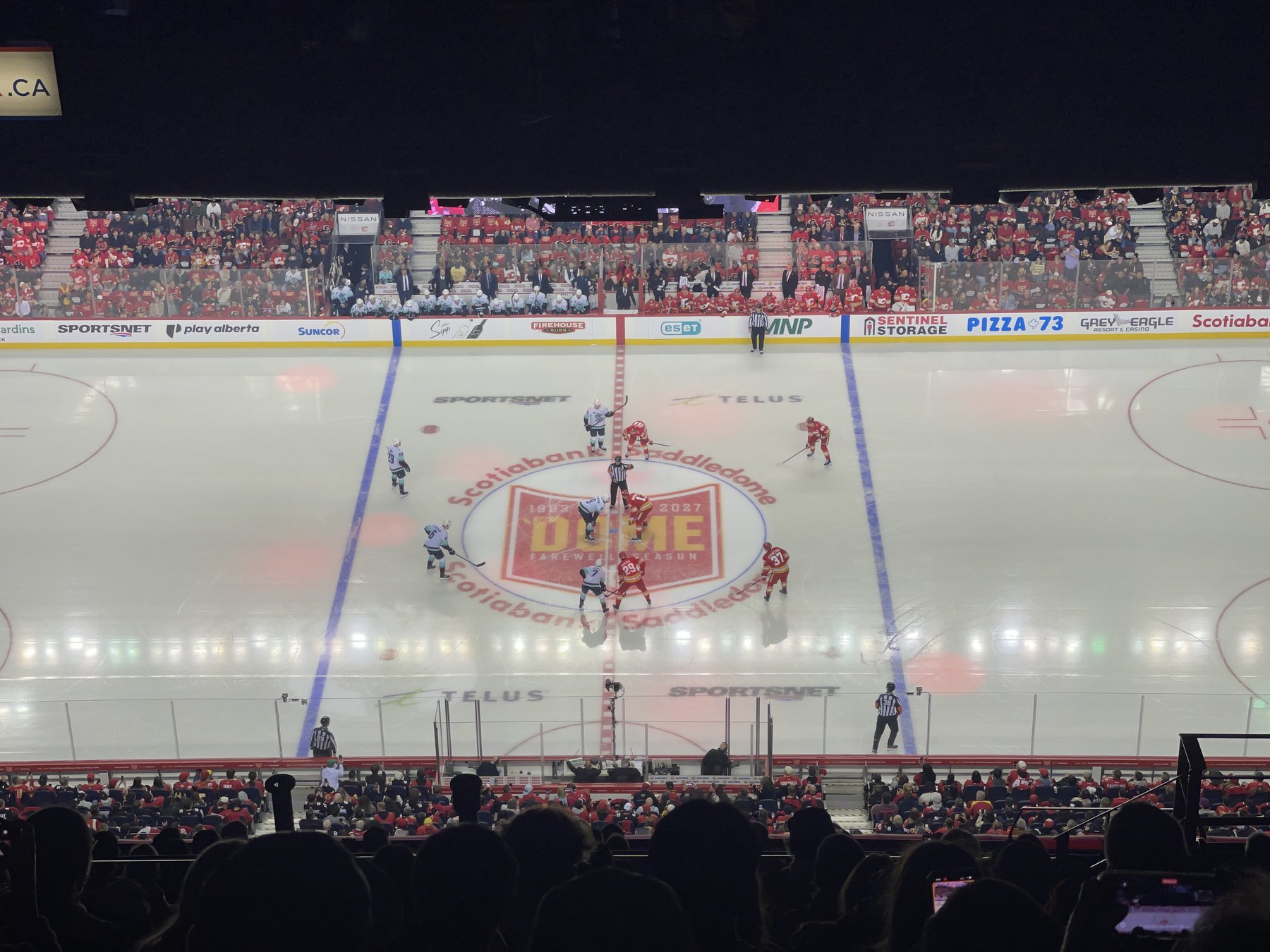
Forty-three years later, on the club’s own camera, Brennan Othmann said it of himself: “I’ve always considered myself kind of a rat.” Ryan Huska said the same afternoon that the rat side is something his team misses at times. Then Othmann was scratched for the Saddledome’s last home opener. Alberta has kept a rat-control zone along its eastern border since the early fifties. The building let one in on its first night, and he won. On its last opening night it kept one in street clothes.
The building will still be there
Bev Ritchie said one more thing to the Herald that June, and it is the reason this page exists. When he was gone, he said, the building would still be there with the name he chose.
He was right about the name. It outlasted the Olympics, the Canadian Airlines years, Pengrowth and the long argument about who would pay for the next one. In the end everybody called it what Frank King said they would, which was the Saddledome.
He may not be right about the building. Scotia Place is closing in, built by the same company whose crew dug the fence post holes in July of 1981, and the Flames are scheduled to move next fall. The saddle that nobody in Calgary had ever seen before has one more winter in it.
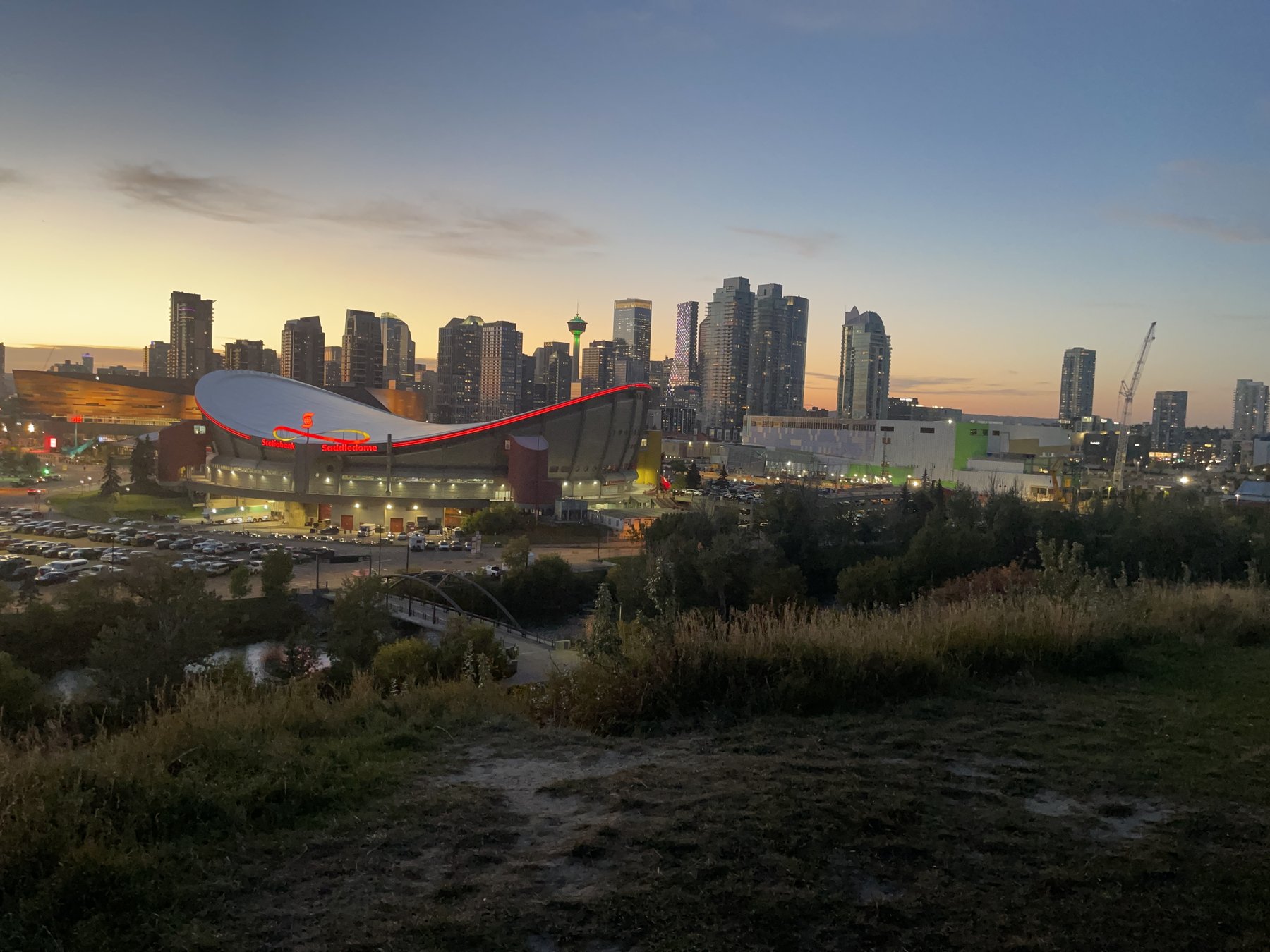
So this is the last season, and the scrapbook is open.
 Next in The Scrapbook → Nelson Skalbania's Two-Thousand-Dollar Night Nelson Skalbania bought the Flames without, by his own count, a dollar of his own in the deal, then bet $2,000 on their first game against Edmonton and lost it. The first Battle of Alberta, October 22, 1980.