Tim Hunter's Atlanta Ex
Atlanta sold Rick Bowness for cold hard cash. Eight years later he is in a headset on the Winnipeg bench in Calgary, throwing a right hand at a Flame, and you can decide for yourself which bill he was settling.

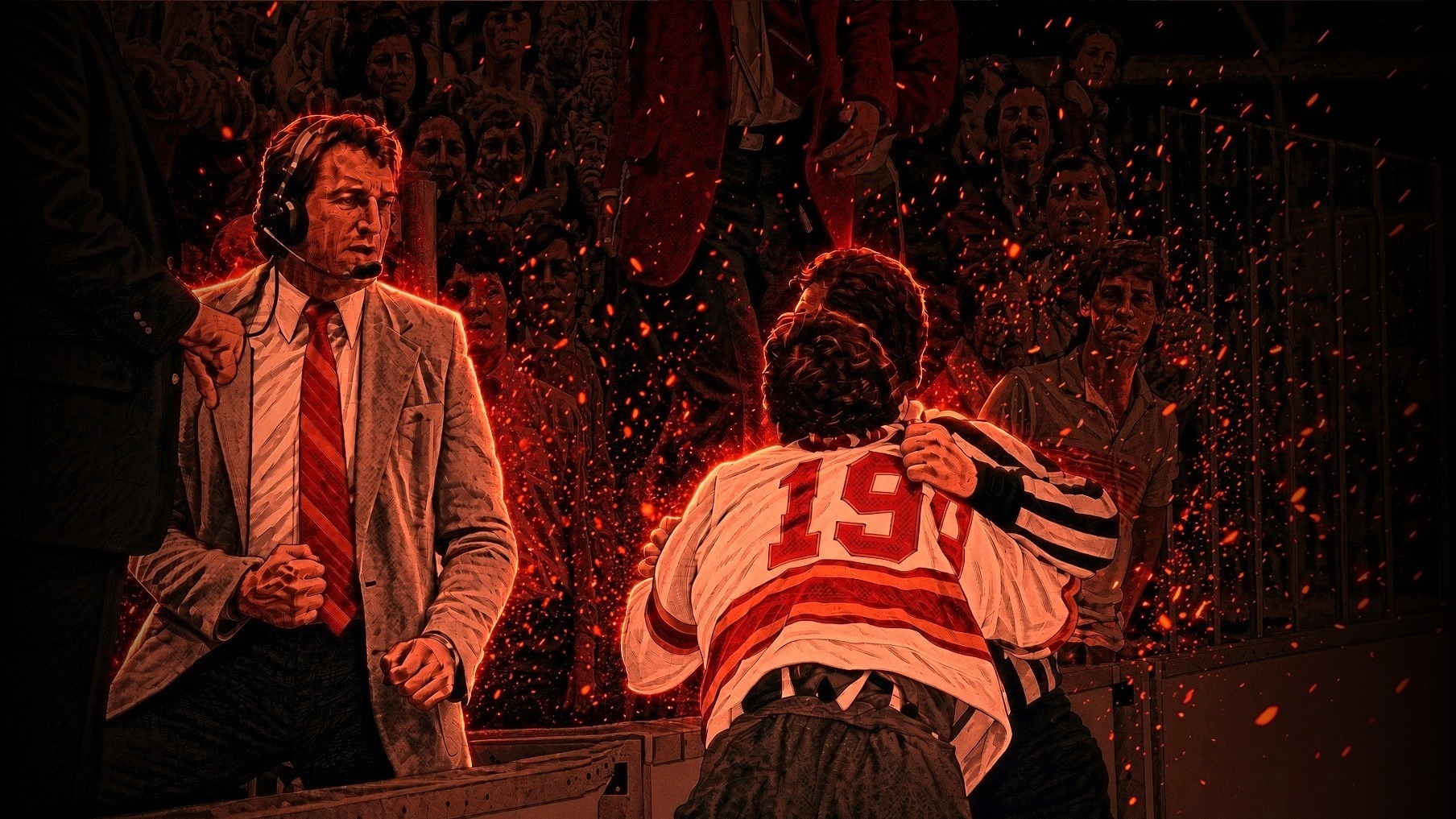
The man in the headset is throwing a right hand.
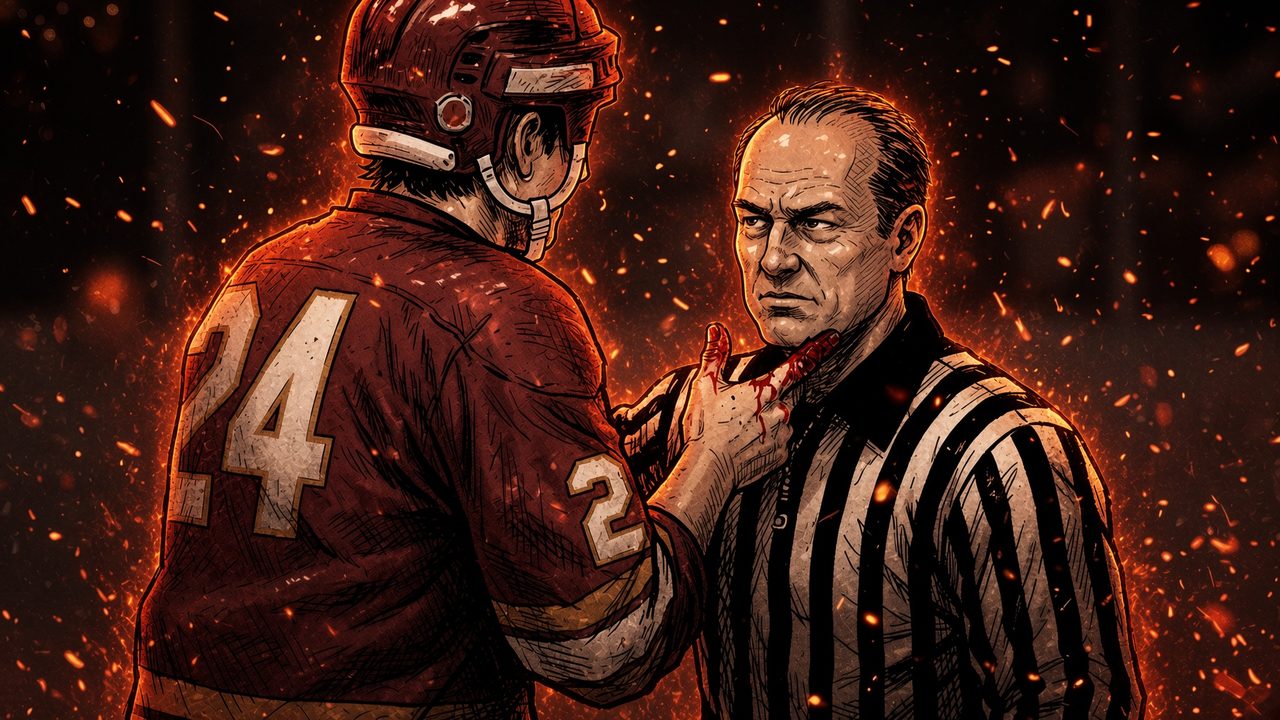
He is an assistant coach. He is in a tan suit, he has a headset clamped over his ears because his job tonight is to talk to the press box, and Tim Hunter is coming at him as fast as a man can skate with an official’s two hands wound into the back of his jersey. Rick Bowness leans out over the boards and throws it anyway. He is set to throw more when Hunter gets hauled back out of range, so instead he tears the headset off his own head and slams it down on the floor of his own bench.
That is where Friday, October 11, 1985 finished up. Here is how it got there, and it takes about four minutes.
Nothing but good, clean fun
The Flames and the Jets had spent the previous day telling anyone who asked that there was nothing between them. Winnipeg had knocked Calgary out of the playoffs the previous April, in the first round, and both dressing rooms wanted it understood that this was ancient history.
Eric Duhatschek, covering it for the Calgary Herald, wrote the whole thing down and then knocked it over in two words:
No rivalry, they said. No lasting bitterness from last year’s playoff series, they said. No talk of vendettas. Nothing but good, clean fun.
Hah. Sure.
By his count the rivalry that supposedly did not exist took less than two periods to explode into a bench-clearing battle royale at the Saddledome.
The part the paper got half right
The game was tied 3-3. The Herald reported the next morning that Hunter highsticked Brian Hayward in the Winnipeg goalcrease, and the penalty sheet backs the call: the high-sticking major is on Hunter’s line, in writing, five entries deep.
The film is less tidy, and a Winnipeg television report filed after the league ruled is tidier still. Hunter had carried the puck behind the net and thrown it into the slot, and he was skating through the crease as Gino Cavallini shot. Hayward went to his knees with his glove up at a high one. Hunter’s stick came up too, going for the same loose puck in the air, and it caught the goaltender in the mask.
Both things are true, which is why three sources that look like they are arguing are not. He was playing the puck. He hit a goalie in the head with a stick doing it. Hayward’s stick came up after that, which the Winnipeg report calls retaliation and self-defence, and which the officials called spearing.
Then he dropped the stick business and went at the goaltender with his gloves up, and that is a different thing entirely.
Up in the CHQR booth, Doug Barkley had it the other way around. Barkley had been doing Flames games alongside Peter Maher since 1981, and twice during the brawl he told Maher he thought Hunter was the one who had been high-sticked, by the goaltender, and that Hunter was bleeding. He hedges it both times. He is also watching live, from distance, with no replay and no penalty sheet. The paper had both the next morning and wrote it the other way, and the officials had already written the high-sticking major against Hunter. But it is worth knowing that the Flames’ own radio booth spent the whole of this brawl convinced their man was the victim of it.
Hayward’s reply was to spear him, which under that season’s new rules was an automatic game misconduct all by itself. So inside about five seconds the Jets had committed their starting goaltender to a fight and guaranteed he would not finish it.
The part nobody called
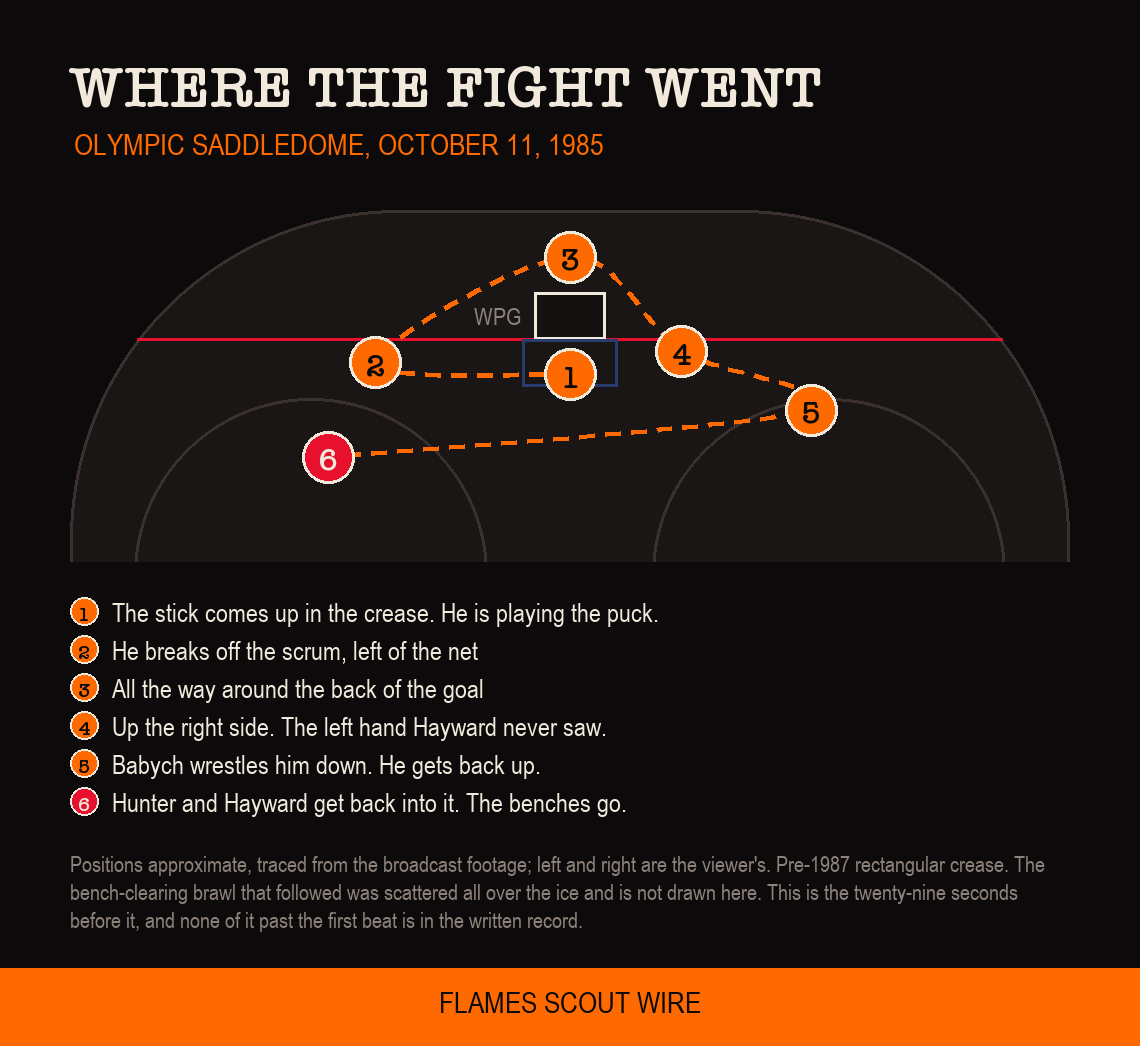
Here is what no announcer mentioned and no newspaper printed, and it is on the tape twenty-nine seconds in.
Hunter broke off the scrum on the left side of the net. He circled all the way around the back of the goal, came up on the right side, and hit Hayward with a left hand he never saw coming.
It dropped the goaltender to a knee.
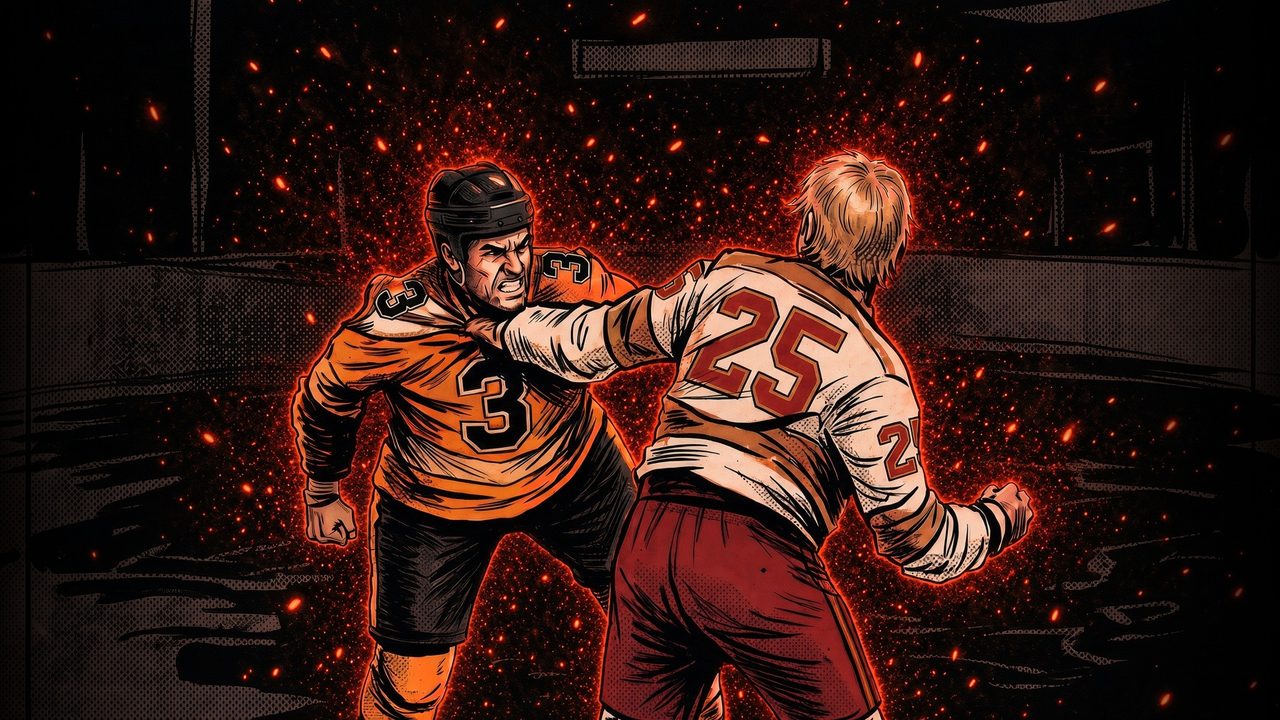
That is the cheap shot. Not the stick, which was a play on a puck. This, which was a decision, taken with enough time to skate the length of the crease and think about it. Dave Babych, number 44, came in and wrestled both Hunter and Cavallini down for it, and Hunter squirmed out from under the pile and went looking for the goaltender again. Only when the two of them had traded punches all the way into the corner did the benches finally go.
If you have read the piece about the crossover grip you know Hunter was a good enough fighter that he never needed the free one. He took it anyway.
Then everybody else arrived
What happened next reads like a set of dominoes falling in a specific order, which is exactly what it was.
The two teams milled about, in Duhatschek’s lovely phrase, innocently enough. Then Hunter got loose from the linesman who was holding him. Jets defenceman Dave Ellett stepped in to deal with him, which made Ellett the third man in, which made Ellett gone.
Winnipeg’s bench went first, led over the boards by defenceman Tim Watters. The Flames were not far behind them.
What the tape shows next is a whole night’s worth of the roster finding somebody. Both goaltenders went at each other, Marc D’Amour with his mask off. Joel Otto and Perry Turnbull paired off. Paul Baxter put Tim Watters on the ice in the near corner and kept him there, which was some kind of justice, because Watters was the one who had led them all off the bench in the first place. Paul MacLean tried to break up the goalies and Jim Peplinski grabbed him before he got there, which settled how the two of them were spending the next few minutes.
And Hunter, still being held, still not finished, turned and skated at the Winnipeg bench with an official riding him the whole way. He never got there. The two of them traded words first, and then Bowness leaned out and let a right hand go. The Herald says flatly that it landed on linesman Randy Mitton. The Winnipeg report, watching the same tape, would only say it appeared to catch Hunter or Mitton or both, and that is the more honest version. For the rest of the night Bill Sutherland ran the Jets from the bench and Bowness watched from the press box, which is one of the few punishments in hockey that fits the crime exactly.
The Herald ran a photograph of it. The caption reads: “Fist-clenched Jets’ coach Rick Bowness (with headset) challenges Tim Hunter.”
Somebody has since put the footage on YouTube. It is age-restricted, so it will not play inside a page like this one, but if you want to watch a man in a tan suit throw a punch and then throw his headset, it is there.
The man in the headset
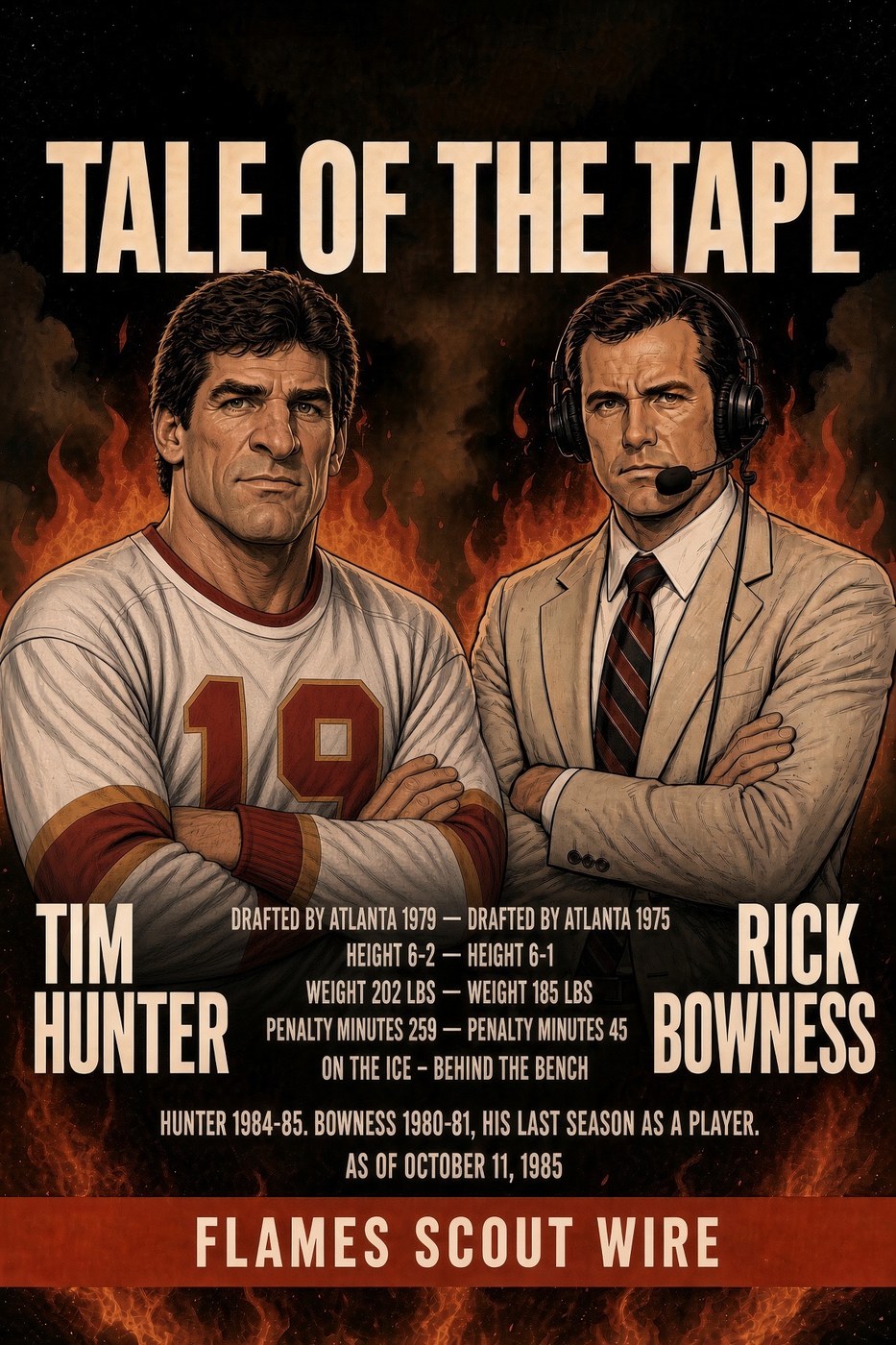
Here is the part that turns a funny story into a good one.
Ten years before that night, the Flames drafted Rick Bowness. Atlanta took him 26th overall in 1975, back when the franchise still played in Georgia, and he spent two NHL seasons on their roster without scoring a single goal for them. In August 1977 they sold him to Detroit for cash. Not for a player, not for a pick. For money.
He was never a Calgary Flame. The team moved north in 1980 and by then he was in Winnipeg. But the crest was the same one, and the organization that put him in the league had priced him at whatever Detroit felt like paying.
So the fist that came out over those boards at Tim Hunter belonged to a man the Flames had drafted, used and sold. Eight years later he was wearing a headset in their building, watching one of their tough guys take a goaltender’s night away, and something in him decided a suit was no reason to keep his hands down.
The bill
Referee Denis Morel threw Hayward and Hunter out with 6:11 left in the second period, calling them the main combatants, which they were. Winnipeg had to put Marc Behrend in cold.
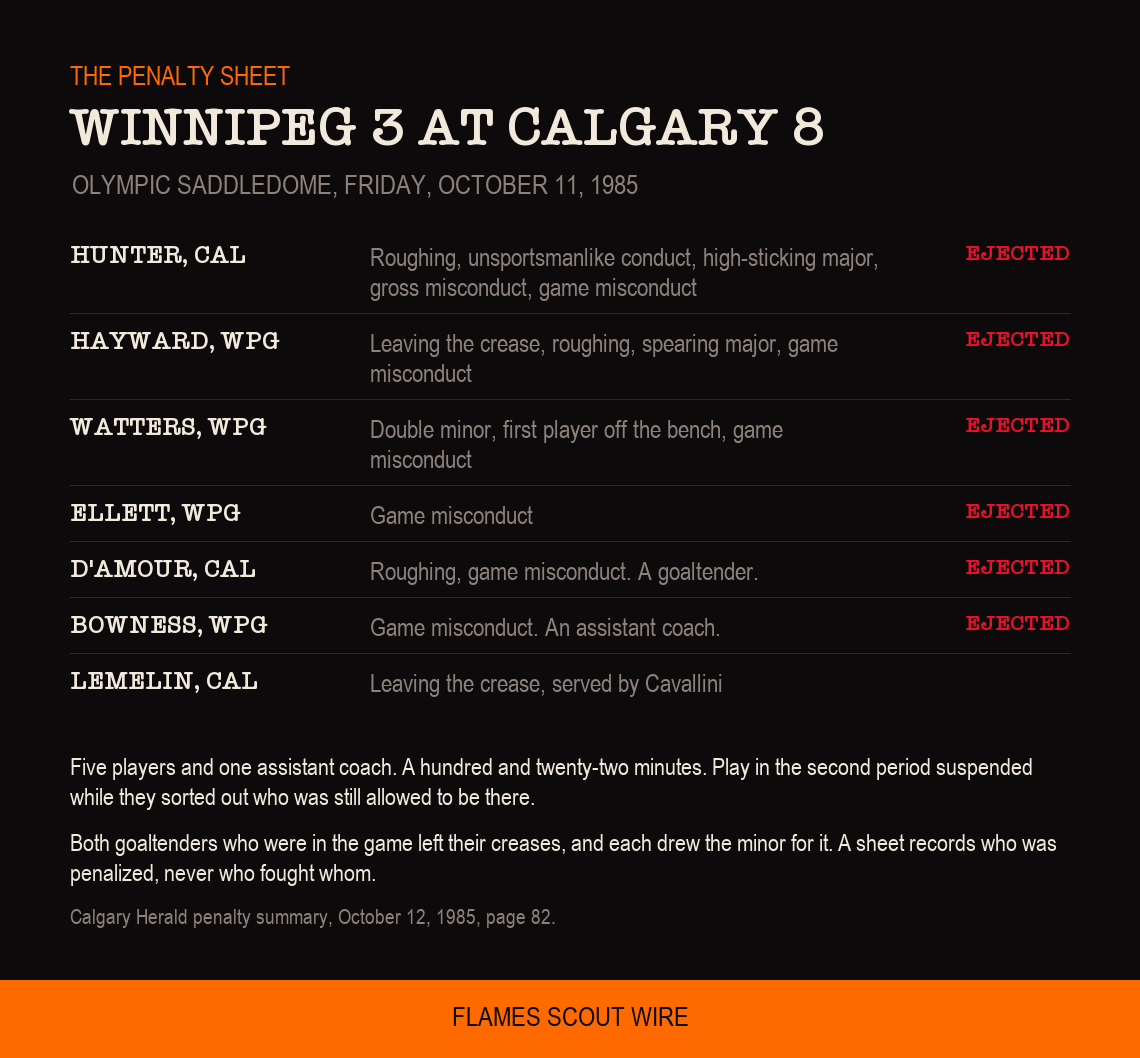
When it was totalled up: five players and one assistant coach ejected, 122 minutes in penalties, and play in the second period suspended while they sorted out who was still allowed to be there.
The penalty sheet names all five. Hunter and Hayward, obviously. Ellett for being third man in. Tim Watters, logged as the first player off the bench, who had also scored Winnipeg’s opening goal that night. And Marc D’Amour, who was one of Calgary’s goaltenders and who came out of it with a roughing minor and a game misconduct.
Hunter’s own line on that sheet runs to five entries: roughing, unsportsmanlike conduct, a high-sticking major, a gross misconduct and the game misconduct. The high stick is right there in the record, which is the second place it turns up, and it is the reason none of this can be told as something that happened to him.
Calgary then scored three times on six shots against Behrend before the period was officially over.
The game nobody remembers
Here is the part that gets lost, and it is the part Duhatschek was actually annoyed about.
The Flames had opened that night looking nervous and unsure of themselves and had gone down 3-0 in the first period while Winnipeg played nearly flawless hockey. Then they came all the way back and won it 8-3. Six goals in a single period, which tied a franchise record. Perry Berezan had two. Quinn, Kromm, Konroyd, Beers, Bozek and McDonald had the others.
It was the best twenty minutes the team played all autumn and it went straight in the bin, because their sheriff had cross-checked a goaltender and the building had gone up. The headline over the story the next morning was not about the comeback. It was Brawl overshadows Flames’ resiliency.
The other bill
The league got around to it a few days later. Brian O’Neill, the NHL’s executive vice-president, handed down $7,600 in fines for one night’s work.
Two thousand of it went to the Flames for leaving the bench and four thousand to the Jets for the same thing, which is the league’s way of saying it knew perfectly well who went first. Watters was docked $400 for being that man. Hunter got $500. Marc D’Amour got $200, which is a strange line to read on a goaltender. Brian Hayward, who speared Hunter and was thrown out for it, is not on the ruling at all.
And Rick Bowness got $500 and three games.
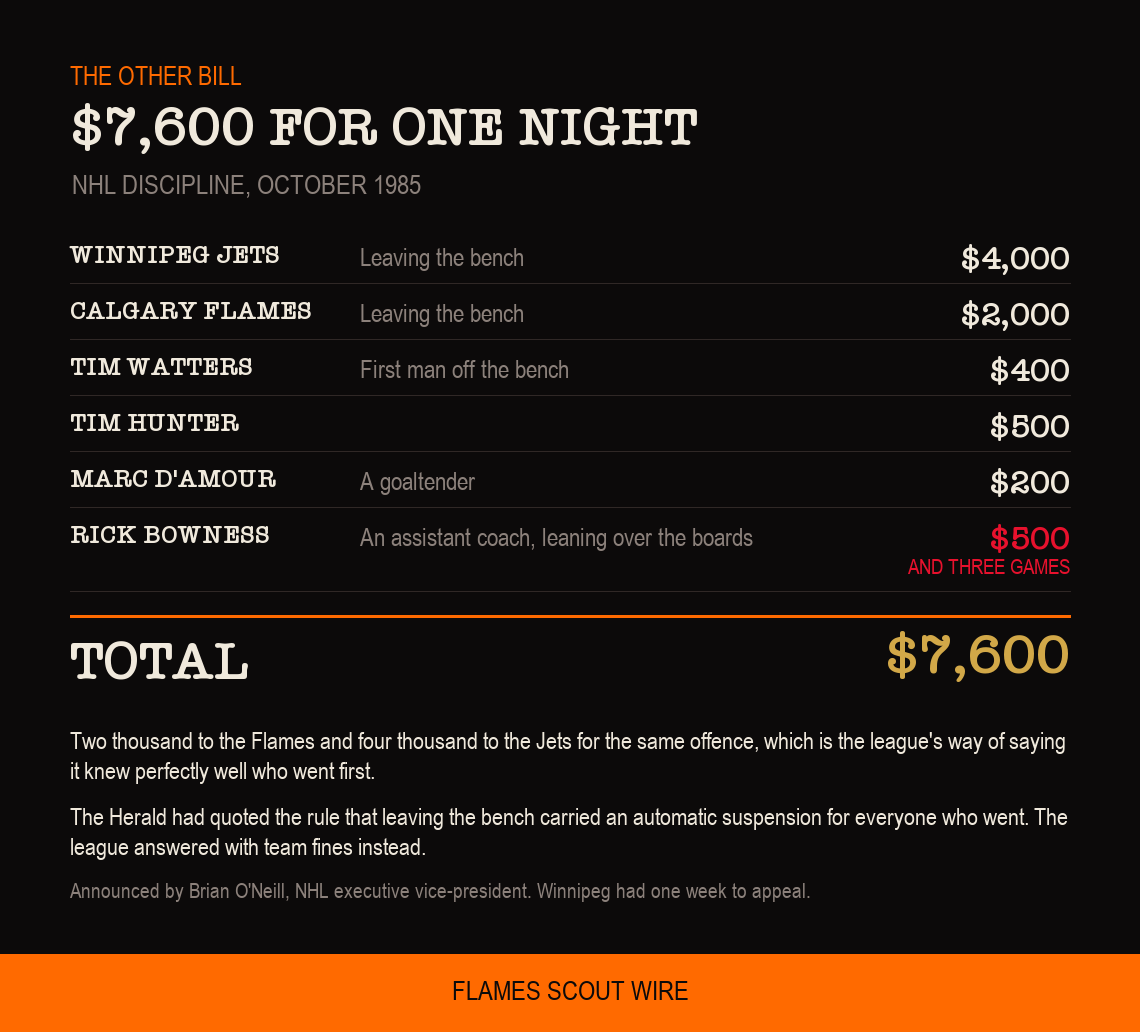
He is the only person suspended out of the whole thing. Not the man who put a stick in a goaltender’s mask, not the man who circled the net to throw the free one, not the twelve or so who came over the boards after them. The assistant coach in the tan suit, for leaning over the boards and throwing one punch that may or may not have landed on a linesman.
Up in the booth, Doug Barkley had said on air that there was going to be a fine in this. He was right, and it was not the one anybody was watching.
Seven months later
There is a coda to this, and it is the reason Hunter is worth more than one story.
In May 1986 the Flames were in the Stanley Cup final at the Montreal Forum, and Hunter spent a Wednesday practice looking at a door. He had worked out that the visitors’ bench at the Forum had the narrowest doors in the league, narrow enough that a big team could not change lines cleanly. He took it to assistant coach Bob Murdoch, Murdoch took it to Serge Savard, and hours before the next game the Forum maintenance staff moved the visitors’ bench eight inches back from the boards on a ruling from the league’s supervisor of officials.
“They were put in 60 years ago when all the guys were five-foot-four,” Murdoch said. “Now, they’re all six-foot-four.”
So: the man who cross-checked a goaltender to start a bench-clearing brawl in October was, by the following May, the man who won a Stanley Cup final argument about carpentry.
Both of those are him. The record keeps the eight inches. The rest of us kept fight night.
 Next in Tales from the Sin Bin → Sandy McCarthy's Title Belt In 1994, Bob Probert needed a head butt to stop a 21-year-old rookie. It took him 16 years and a memoir to name who had the hardest punch.