Sandy McCarthy's Title Belt
In 1994, Bob Probert needed a head butt to stop a 21-year-old rookie. It took him 16 years and a memoir to name who had the hardest punch.

The rookie is facing the wrong way.
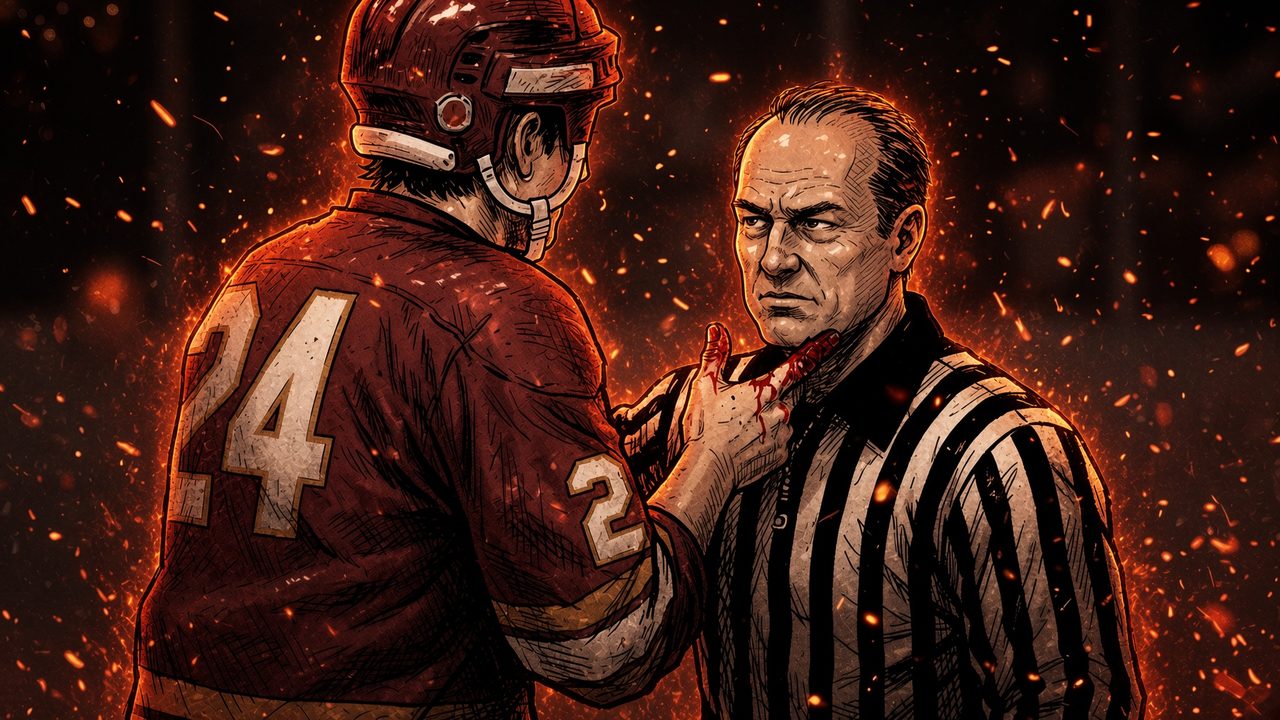
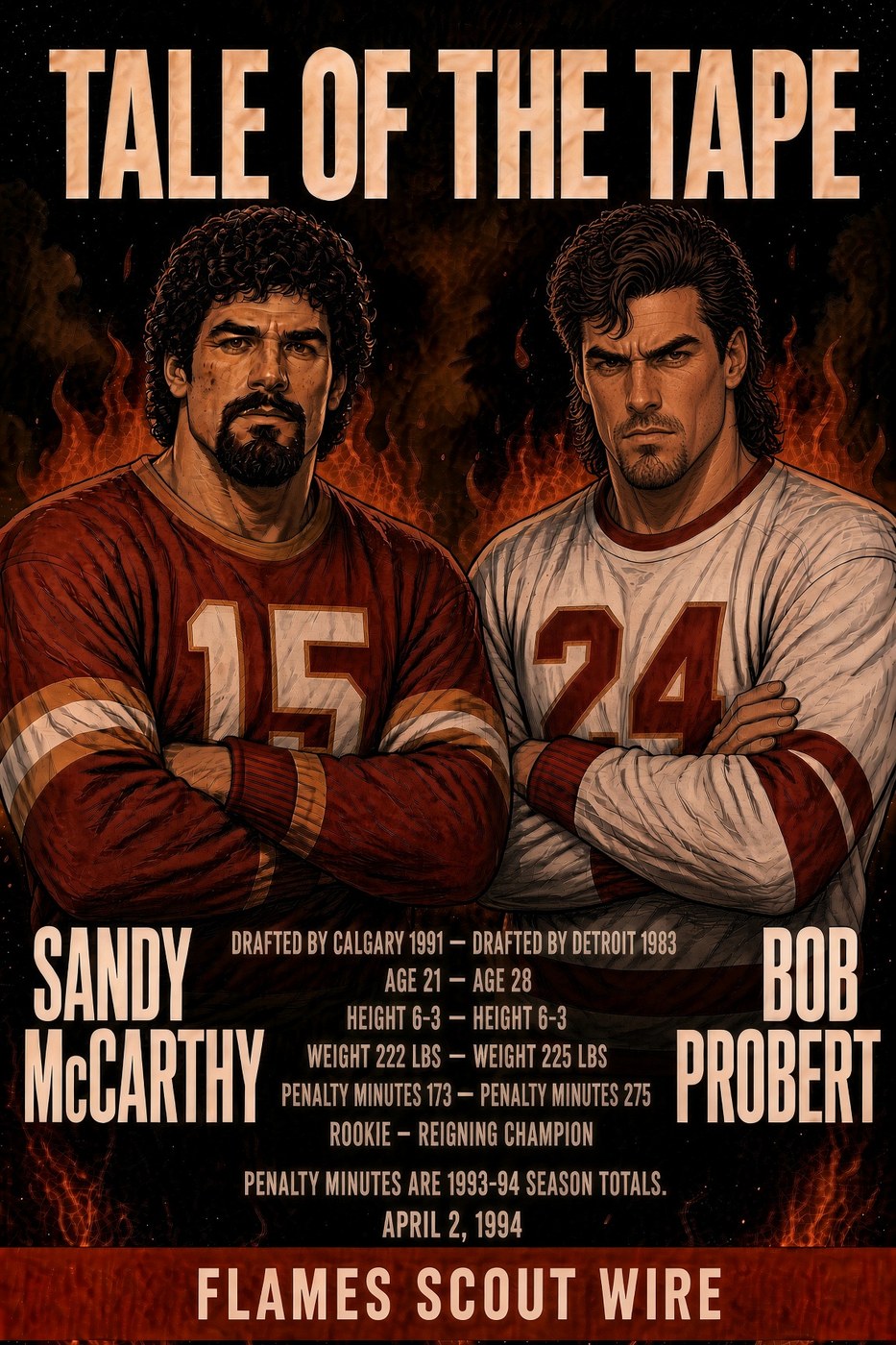
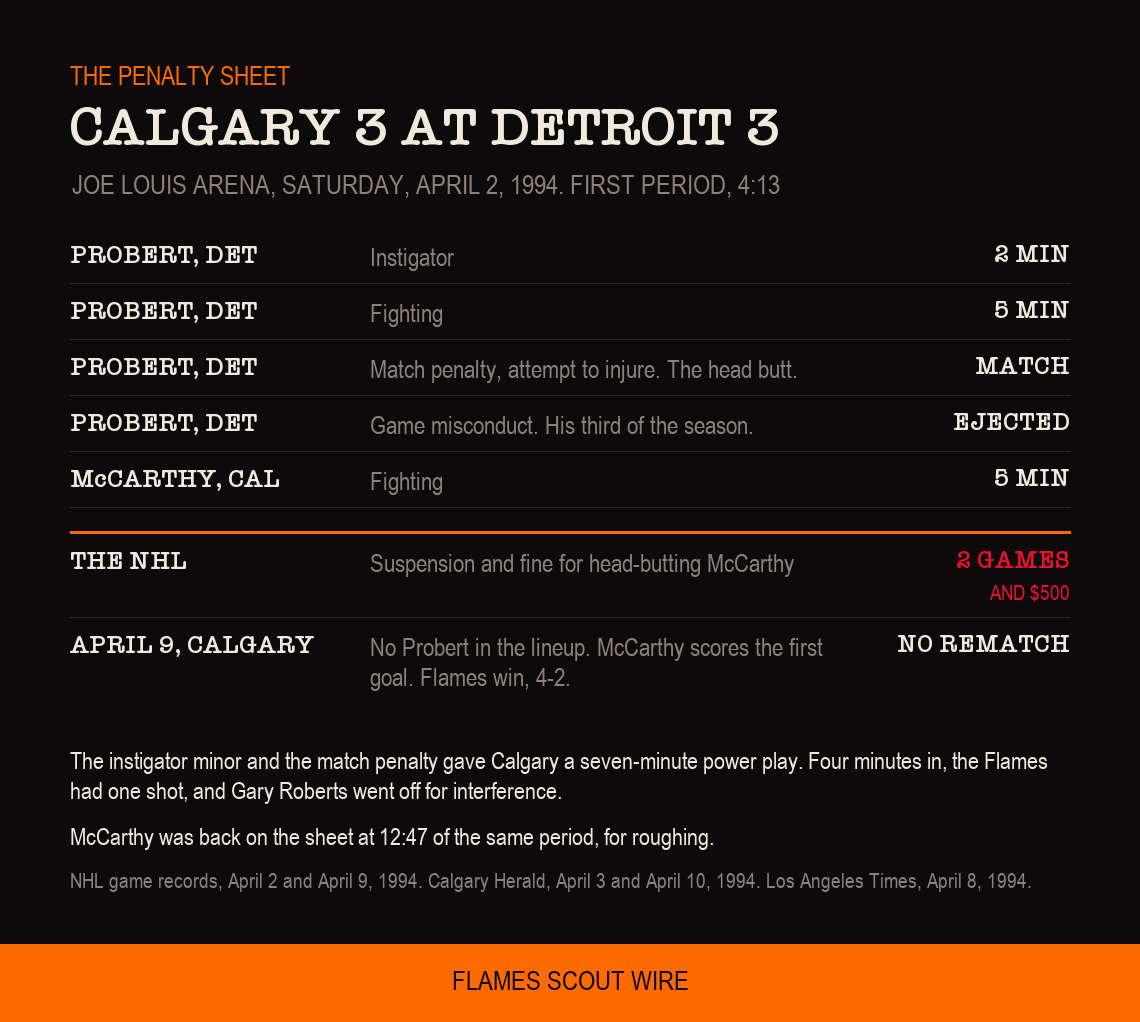
It is the second shift of a Saturday afternoon at Joe Louis Arena, April 2, 1994, and Sandy McCarthy of the Calgary Flames has followed the puck behind the Detroit net. Two nights earlier, in Philadelphia, he did not get a single shift. Now Bob Probert is on him from behind, and the clock says 4:13 of the first period, and McCarthy has his back to the most feared heavyweight in hockey.
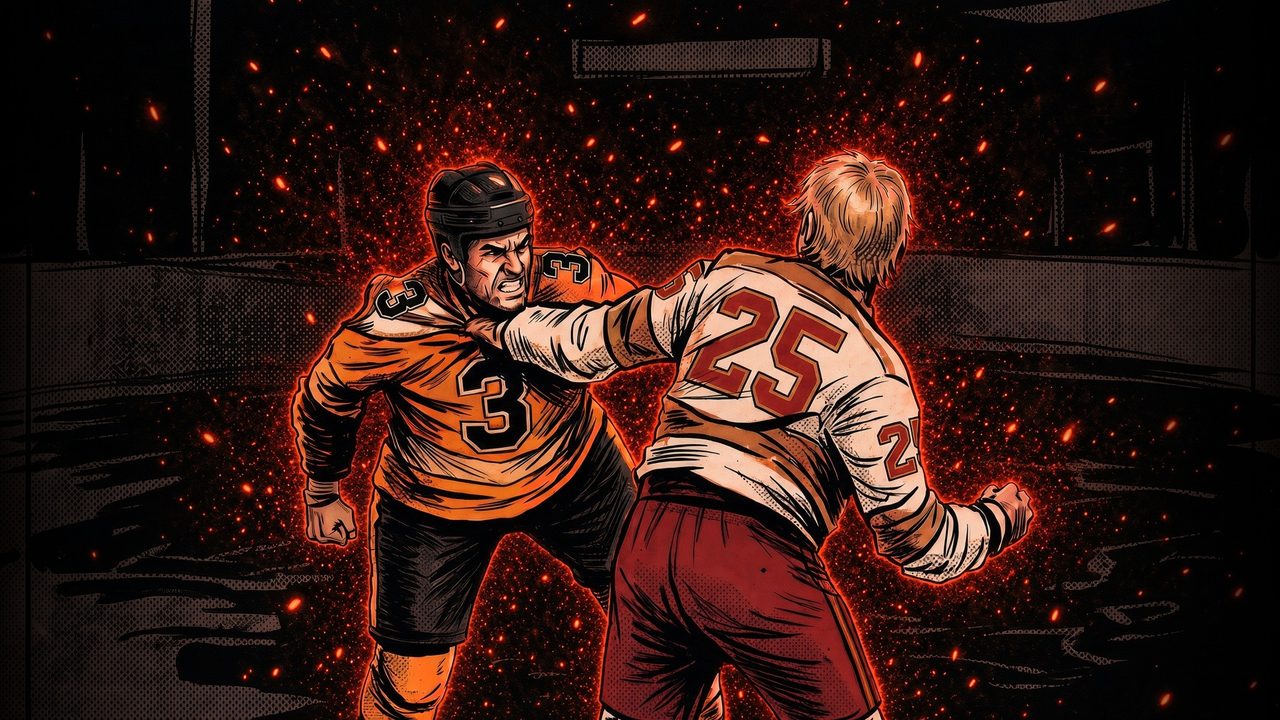
He turns around. He gets himself squared up. And then, for the better part of a minute and a half, the kid who sat the whole game on Thursday stands in with Bob Probert, throwing right hands, and Probert does not land one that matters.
Mike Board of the Calgary Herald was there, and his lead the next morning said the rest: one game you sit on the bench without a shift, the next you are getting head-butted by Bob Probert in your biggest fight of the season.
Because that is how it ended. With a head butt.
The man across from him
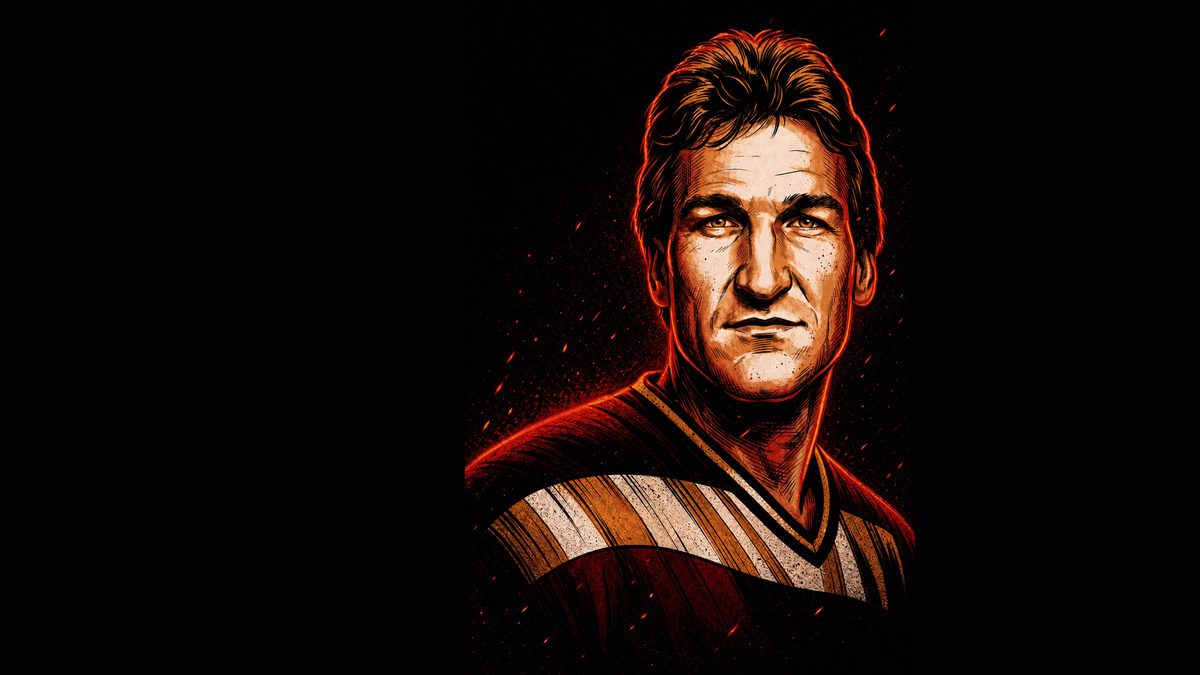
To understand why a hockey fight in a lost spring could matter this much, you have to understand who Probert was in 1994. The Herald’s Eric Duhatschek would call him the league’s reigning heavyweight champion, and nobody in the sport would have argued the point. He could fight in close. He could stand back and throw bombs. Teams did not so much fight Probert as schedule around him.
McCarthy knew all that better than most. He had grown up watching him.
“As a young junior player watching games, I used to really look up to Bob Probert,” McCarthy said on the Dropping the Gloves podcast in 2026. “He was like the tough guy, one of the toughest guys that wore the skate.”
He was twenty-one that afternoon, in his first NHL season, a third-round pick out of the Quebec junior league. And he had not been looking for this one. The last time the two teams met, in Calgary, McCarthy had taunted Probert, and Probert would have none of it. By Duhatschek’s account that fall, Calgary’s coaches had told their rookie to leave Probert and Dave Brown alone all season and play the game.
“I’m not going to disobey the coach’s orders,” McCarthy said.
It turns out that when Bob Probert decides you are fighting, the coach’s orders do not come into it.
“We were going behind the net and he was cross-checking me and whacking me with his stick,” McCarthy said afterwards. So he answered.
A minute and thirty-three seconds
Here is what the Herald saw. McCarthy started the fight turned away from Probert, straightened himself out, and delivered several hard right hands. Probert got no damaging punches through.
Board counted forty-five seconds of McCarthy punching. The television booth timed the whole thing. “One minute and 33 seconds was the duration of the scuffle,” one of the announcers said over the replay. “It was a long one.”
Then Probert put his head into McCarthy’s face.
“I certainly wasn’t expecting that at all,” McCarthy said. He caught the edge of Probert’s helmet on his cheek. “I had hit him with a pretty good one just before that … so I think that is why he did it.”
That is the story told with the loser’s move at the end of it, and it is worth being plain about: a head butt is not part of the code. It is what you do when the fists are not working. The officials agreed. Probert got an instigator penalty and a five-minute match penalty, and he was gone. He had no comment after the game.
Detroit’s general manager, Bryan Murray, did not bother defending him. “I obviously am disappointed the way it happened,” he said. “You just can’t do that.”
The Flames got a seven-minute power play out of it, and in the Herald’s telling they wasted it: one shot in the first four minutes, and then Gary Roberts went off for interference on what Board called an obvious make-up call. Some things about hockey in 1994 were exactly as advertised.
Touching the belt
As a reporter walked up to McCarthy’s stall after the game, one of his teammates grinned and asked him a question.
“You going over there to touch his belt?”
There was no belt, of course. There never has been. It is the imaginary heavyweight championship of the NHL, the one every tough guy in the league knows the holder of without anyone ever saying so out loud. But everyone in that room knew what he meant. A rookie who had not played on Thursday had just gone a minute and a half with the champion, and the champion had needed his forehead to finish it.
Calgary coach Dave King put it in more careful words, which was his way. “Sandy deserves some credit,” he said. “After that, their gunslinger is gone … and, we are a more confident team.”
The rematch that wasn’t
The Red Wings were due in Calgary a week later. The NHL made sure the rematch did not happen. The league suspended Probert for two games and fined him $500 for the head butt, as the Los Angeles Times and the Herald both reported. Board had seen it coming the morning after: it was Probert’s third game misconduct of the season, and he was already a repeat offender that year after a four-game suspension for swinging his stick at Toronto’s Bob Rouse.
So on April 9, 1994, at the Saddledome, Probert served the last game of his suspension, and McCarthy found another way to hurt the Red Wings. He scored the first goal of the game, on a nice shot from the slot.
By September the Herald was writing that the secret of Sandy McCarthy was out. Duhatschek looked back over the rookie’s first season and found that some of his fights had ended in draws, but he had not lost any. That same piece dated the Probert fight to March. The game story, written the next morning in Detroit, says April 2, and the next morning wins.
Two words
Probert moved to Chicago. McCarthy stayed in Calgary. They kept meeting.
When the Flames and the Blackhawks opened a playoff series in April 1996, the Herald’s Allan Maki went looking for the matchup everyone wanted to talk about, and found out that the two of them had almost nothing to say to each other. In the dozen games they had played against one another over three seasons, Maki wrote, McCarthy and Probert had exchanged only two words.
“Let’s go.”
“He knows he has a job to do and I’m the same way,” McCarthy told him. “When it’s time to go, we both know. Nobody has to say much.”
That is about as good a description of the heavyweight’s trade as anybody has given, and it came from a twenty-three-year-old.
Chicago, 1997
The last chapter came in the fall of 1997.
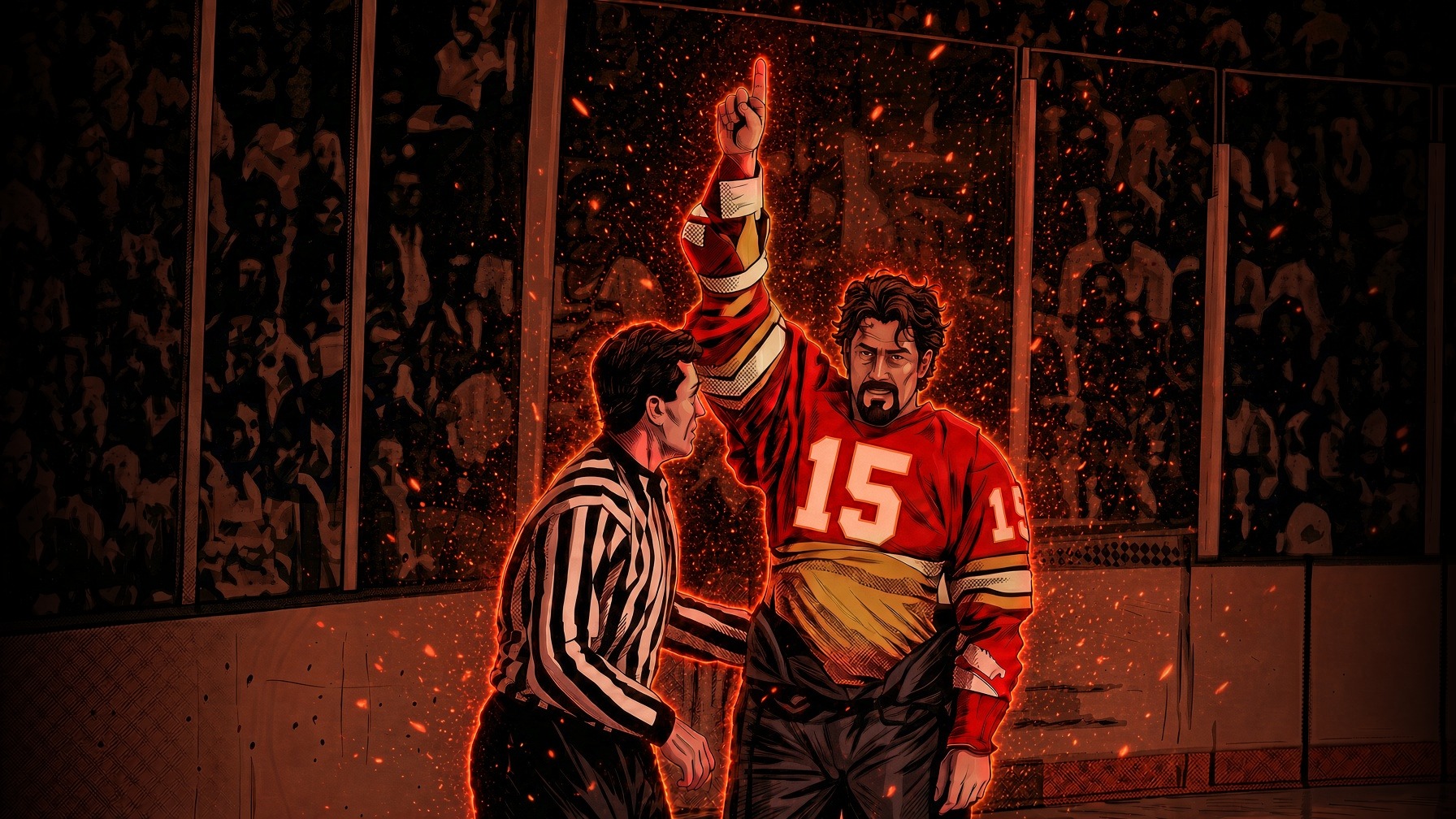
On Monday, November 10, an Associated Press photographer named Tim Boyle was at the rink in Chicago when the two of them went again in the first period. His caption is the plainest document in this whole story: McCarthy, number 15, landing a punch on Probert, number 24. Both players were given fighting penalties.
Seventeen days later, when the Blackhawks came to Calgary, neither heavyweight was in the lineup. The Herald reported that Probert was scheduled for season-ending surgery on his rotator cuff, and that he had hurt it, as the paper put it, ironically, in a fight with McCarthy in Chicago earlier that season, on a night the teams tied 1-1. The paper does not give the date, but the schedule does. Calgary played one 1-1 game in Chicago before that story ran, and it was November 10. It was the fight in the photograph.
McCarthy was out too, with a shoulder of his own. His had come on a hit, not a fight, and he was careful to say so. “When you get injured when you are fighting it is usually because you slip and twist an ankle,” he said, “or you are wrestling and pull a shoulder.”
There is no joy in that part of the story, and there should not be. Four months later the Flames traded McCarthy to Tampa Bay, and the rivalry ended the way most of them do, with nobody announcing it.
Page 244: who had the hardest punch
Bob Probert died in the summer of 2010. He had been working on a book with Calgary writer Kirstie McLellan Day, and Tough Guy: My Life on the Edge came out that fall. Deep in it is a quick list of questions, the kind every old fighter gets asked at every banquet, with his answers in parentheses.
Who had the hardest shot? Al Iafrate.
Who did you fight the most? Stu Grimson, thirteen times.
Who had the hardest punch?
“Sandy McCarthy.”
Thirty-two years after that Saturday in Detroit, McCarthy was asked on a podcast which moment of his career he was proudest of. He did not pick a goal. He went straight back to the kid watching junior games and looking up to Probert, and then to the afternoon he found out he could stand in with him.
“I’ve had all these other fights, but this one with him has just proven the fact that I’m legit,” he said, “and that I belong where I am.”
A rookie who could not get a shift on Thursday found out on Saturday that he belonged. The champion, it turns out, came to the same conclusion. He just took until the last pages of his book to say so.
Next in Tales from the Sin Bin: the boxing family, the rookie camp, and the part of his career that was about more than hockey. Weekend Clipboard subscribers get the full story of race and the NHL in the 1990s, in his own words.
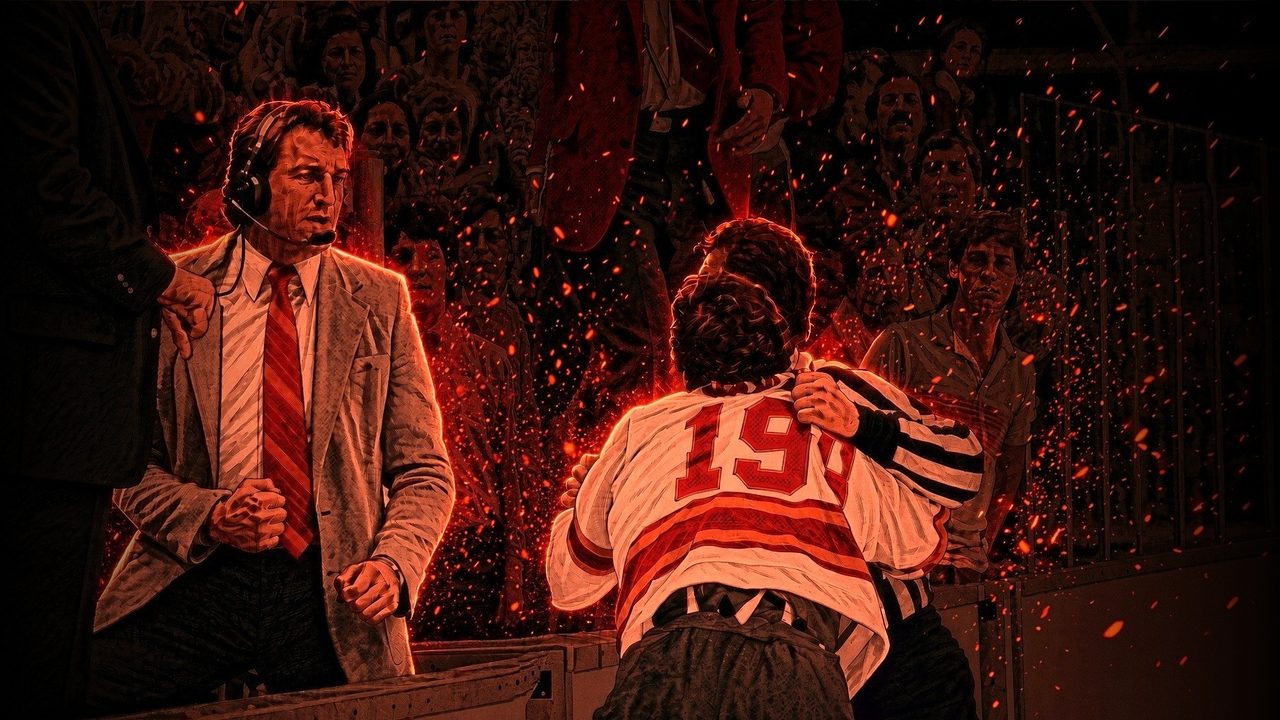 Earlier in Tales from the Sin Bin → Tim Hunter's Atlanta Ex Atlanta sold Rick Bowness for cold hard cash. Eight years later he is in a headset on the Winnipeg bench in Calgary, throwing a right hand at a Flame, and you can decide for yourself which bill he was settling.